Music terms
Music glossary
More than 110 music terms explained simply, from accent to whole note, with examples in music notation.
Search the glossary
A
Abbreviation, signs of abbreviation
They are signs which ease both writing and interpreting music language. They are:
Refrain Its symbol is formed by two lateral dots towards a double slash and indicates the repetition of the part of the text contained within both signs: 
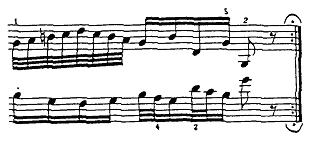
We often find, along with the second refrain symbol, some bars marked with the numbers 1 and 2. This means the bar marked with the number 1 must be executed only once. In repeating the refrain it will be skipped up and you will proceed with the bar marked with the number 2: 
Da Capo (abbreviated in D.C.)
It is needed to repeat the text from its beginning as far as the word "End".
There exist further repetition symbols that may be located anywhere in the text. As follows, you find some examples on the likely use of these symbols:
From  to to  |
From to End | From D.C. to |
From D.S. to |
|---|---|---|---|
The symbol D.S. indicates the word "Dal Segno" ("From the sign").
Signs of repetition.
They indicate the repetition of:
a note of the scale or a group of notes: 
a whole measure: 
two measures: 
Separation lines.
They are transversal lines, as similar as travatures, located either below a note or between two figures which we want to repeat as separated.
Here are some examples: 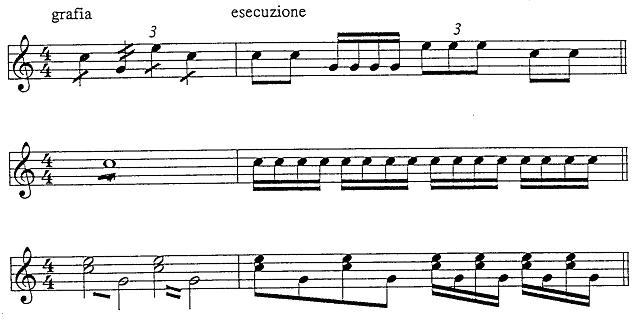
Accent
A sound or a group of sounds become intensified with a particular rhythm or expression effect. Accent signs are set above the note to be intensified or, in case of sforzato, next to itself.
They are:
Sound appoggiato: 
Strong attack: 
Vibrato attack: 
Sforzato: 
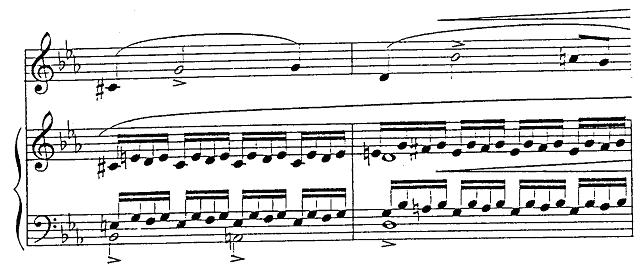
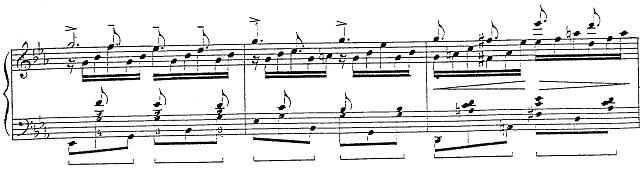
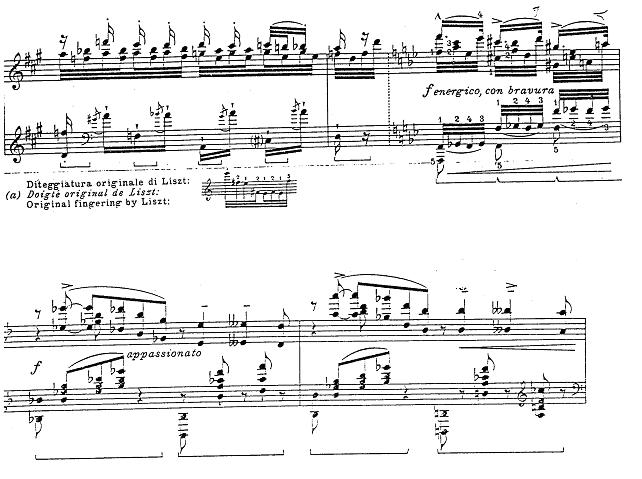
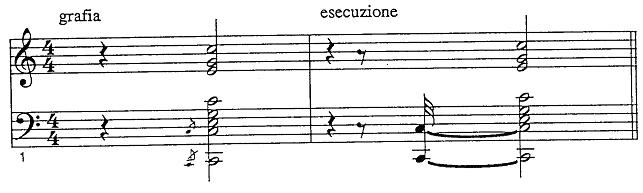
Acciaccatura on chord
Intended in anticipating some notes from the chord itself.
Acciaccatura or grace note

A sort of music embellishment consisting in very swiftly executing one or more accessory notes right before or after either the royal note or the chord following them. As related to them through a linked level (semitone or tone), it can spend even quite long intervals. This often occurs in contemporary music where we can find an acciaccatura to be executed at the end of its reference note.
Acciaccatura is represented through a small quaver with a slanting segment and set at the left of the royal note.
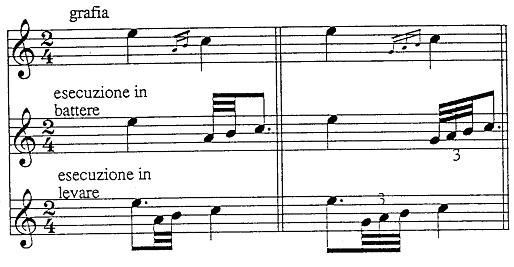
Acciaccatura can be located afore a note or in the previous bar:
- in battere (beating)
- in levare (rising)
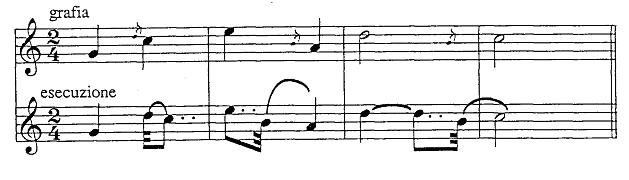
Acciaccatura for a long interval:
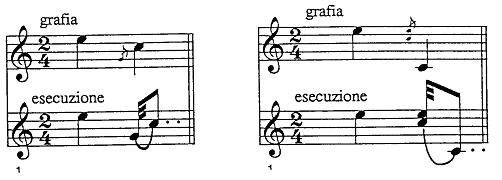
Double and triple acciaccatura:
Acciaccatura on chord:

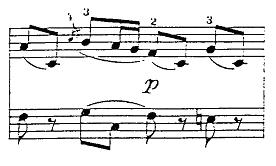
Accidental or alteration
It is a sign that prescribes the alteration of a note when located afore it. Accidentals are: sharp and double sharp; flat and double flat; natural and double natural (See Alteration).
Additional cuts
They are the small transversal dashes either on the body of the note (head cuts) or above or below it (Neck cuts) to indicate its height out of the line.
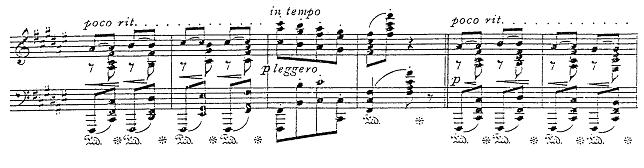
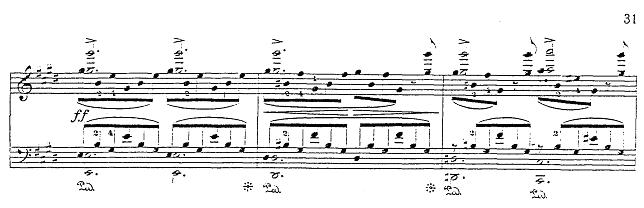
Agogic
To indicate the different execution speeds of a music text you can use following terms: grave, very slow, slow, adagio, andante, moderately slow, moderately, rather fast, fast, quite fast, quick, very fast.
There exist further terms that, associated to the above-mentioned ones, define more precisely the tempo of the music text. They are: grave, sustained, imposing, military, grand, scherzo, comic, resolute, passionate, impetuous, sweet, calm, with fire, dying, funereal, chantable, excited, marked, gracious and so on.
To vary the speed of the movement during its execution you use following terms (their abbreviations are indicated in brackets): accelerando (acc) (quickening), ritardando (rit) (slowing down), rallentando (rall) (slowing down), più mosso (more motion), lively, strict, smorzando, ritenuto (sudden slowing down).
The agogic can be accompanied by metronomical indications further specifying the tempo too.
Alterations
Alterations are signs (also called accidentals) which augment or lower the pitch of a note when set at its left.
The sounds with the symbol of alteration are called altered sounds (sharped or flatted) compared with the natural sound they represent.
As follows, you find alteration signs:
| sharp sharp | alters the note of a semitone to above; |
|---|---|
| double sharp x double sharp | alters the note of two semitones to above; |
| flat flat | alters the note of a semitone to below; |
| double flat double flat | alters the note of two semitones to below; |
Alterations can be: temporary, precautionary and constant.
Appoggiatura
With this term we mean a note, graphically represented as smaller, which is extraneous to the harmonic context preceding the royal note to lean onto it.
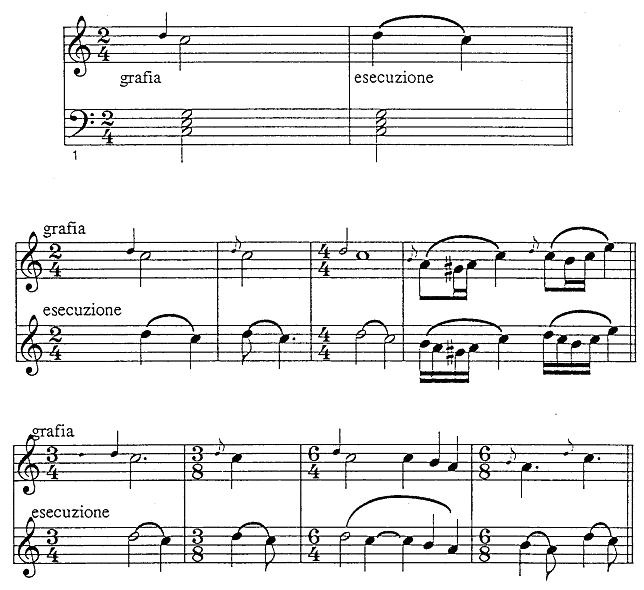
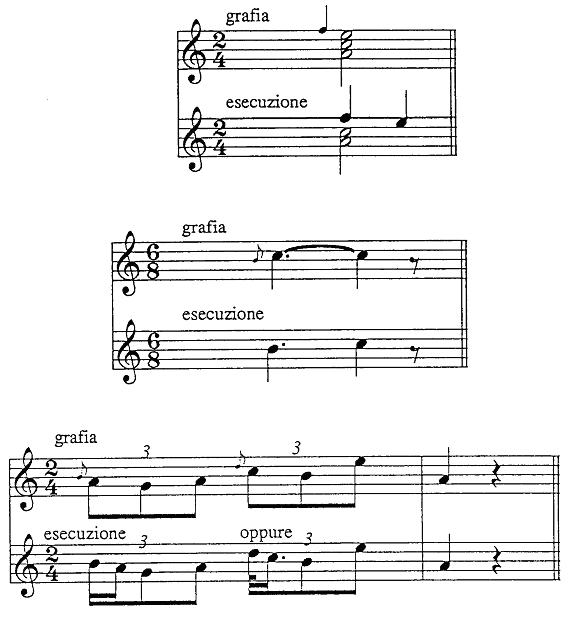
Arpeggio

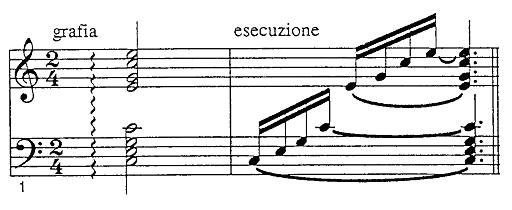
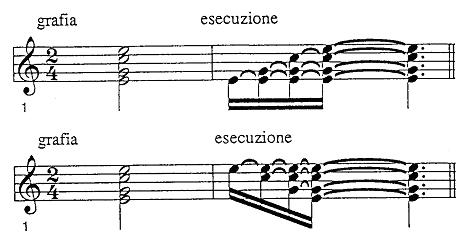
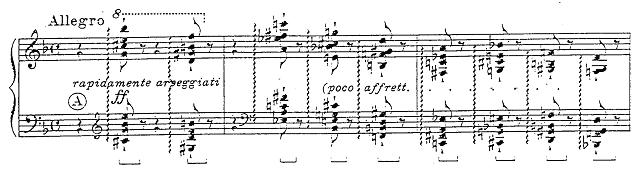
The arpeggio is represented with a vertical and wavy line set at the left of a chord and indicates that the notes will be executed as following one another starting from the gravest one.
Even for the arpeggio the execution speed depends on the style of the text as well as the artist's interpretative sensitivity. However, it cannot last longer than the value of the notes that represent it. The arpeggio is a characteristic embellishment of keyboard instruments and the harp in particular:
If the symbol of the arpeggio is broken, the two chords start in the same instant:
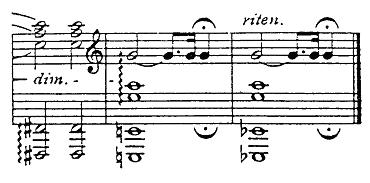
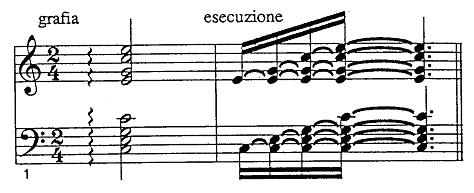
The arpeggio can be even indicated with a vertical dash set under the note or on its leg. The below-oriented dash indicates the down-under arpeggio and in this case it starts from the highest note.
Asterisk
Symbol used to indicate the point in time to lift the piano supporting pedal. The symbol that indicates the moment to lower the pedal is shortened with Ped.
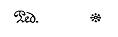
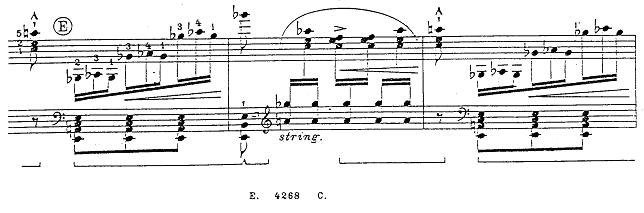
Another way to indicate the supporting pedal is to set a continuous line ending up with a slanting tract.
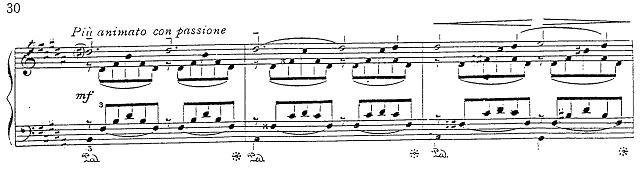
B
Bar

It is a vertical bar that separates two music bars. At the end of the music there is a double bar with the second one being larger than the former one. In orchestra partitions the line is interrupted at the border of the single instrumental families. See Bar.
Bar

Within the pentagram we find the bar meant as the space existing between two strings located vertically with respect to the pentagram lines.
Within the bar there is a series of music figures whose value sum is equal to the indication set at the beginning of the music text right after the clef. Such an indication is expressed through a fraction (4/4, 2/4, 3/8 etc.) of the measurement unit: the whole.

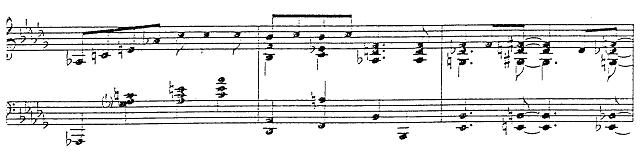
Baritone clef
F-clef situated on the third line. It can be also indicated with the C-clef situated on the fifth line.

Bass clef

F-clef situated on the fourth line.
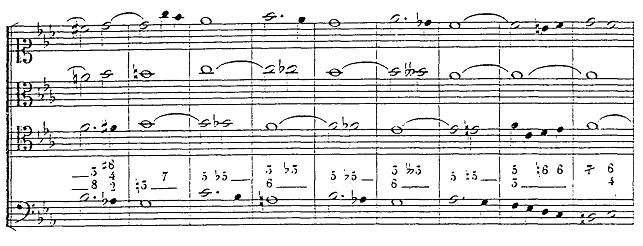
Beams
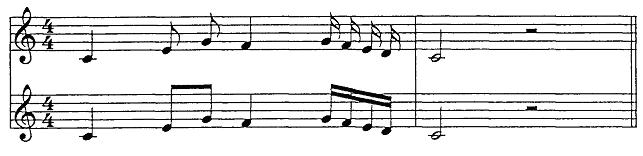
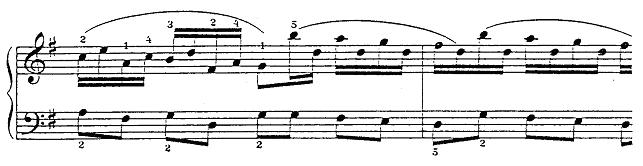
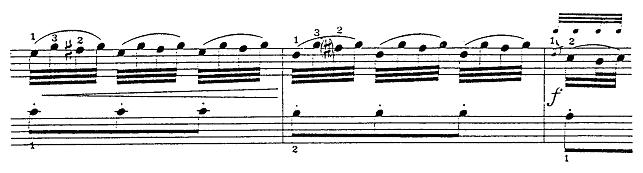
Generally, the legs of two or more notes in succession are joined by a more marked union tract:
Bowing
In the strings, each go or back movement is executed by the bow on the chords. Every movement can be distinguished as follows:
Bowing downwards if executed from below to above and indicated with the sign  or down-under.
Bowing upwards, indicated with the sign  , if directed in the opposite way.
Bracket
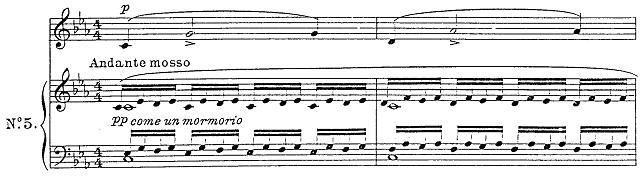
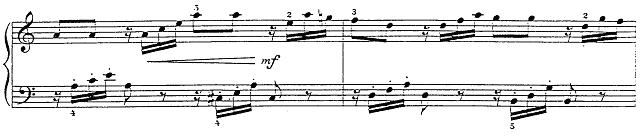
Vertical sign representing a wavy bracket which joins two or more pentagrams with a simultaneous reading.
Breve

Name of both a note and a rest. It indicates a relative value whose duration corresponds to two wholes (See Music figures).
C
C-clef
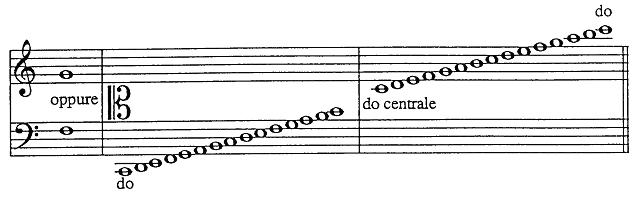
Its form stems from the letter "C" which, in the ancient alphabetical notation system, indicated the note C. It can be inserted into the first, second, third, fourth and fifth line.
The corresponding sound C for all of the five clefs is equal to the one of the fourth piano octave also called central C or C3. In some writings it is possible to find two small dots, such as for the bass clef, to better define the line the clef is situated on.
Here is an example of C-clef with the two small dots above and below the line:

When situated on the first line it is called soprano clef as it can be used to stretch the soprano voice extension. Its position can be even defined through two small dots above and below the first line. Example:
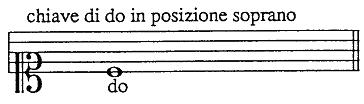
When situated on the second line it is called mezzo-soprano clef since it is used to stretch the mezzo-soprano voice extension. Its position can be even defined through two small dots above and below the second line.
Example:
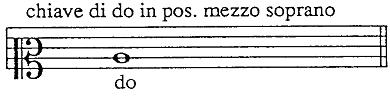
When situated on the third line it is called contralto clef since it is used to stretch the contralto voice extension. Its position can be even defined through two small dots above and below the third line.
Example:
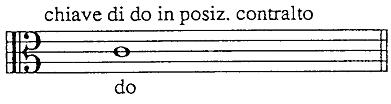
When situated on the fourth line it is called tenor clef since it is used to stretch the tenor voice extension. Its position can be even defined through two small dots above and below the fourth line.
Example:
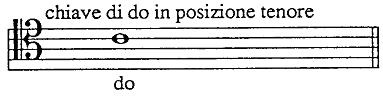
When situated on the fifth line it is called baritone clef since it is used to stretch the baritone voice extension. Its position can be even defined through two small dots above and below the fifth line. This latter position of the C-clef in the baritone position is rarely used as it is replaced through the F-clef situated on the third line.
Example:
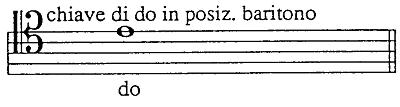
The C-clef is adopted for vocal music (soprano, mezzo-soprano, contralto, tenor and rarely baritone), whereas in instrumental music it is used in the contralto position for viola and trombone contralto and in the tenor position for the high notes of the cello and the bassoon and the tenor trombone.
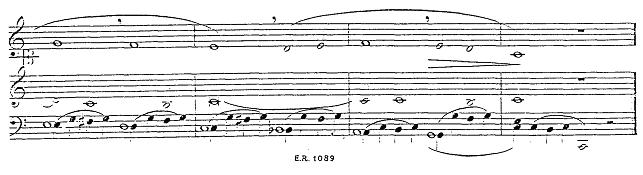
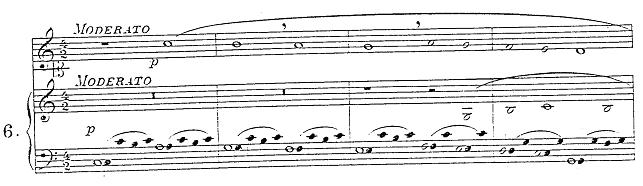
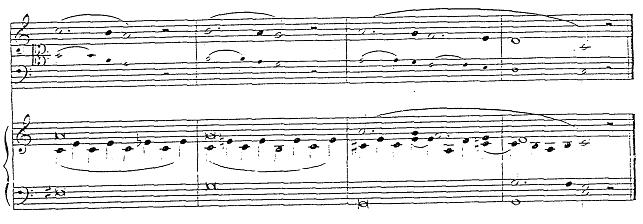
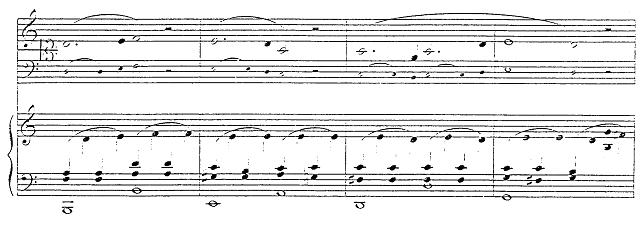
Bozzoli has developed a double pentagram system by adding a fictional central line set as a joining element of the upper and lower pentagram. In the central line you can find the C-clef which allows to read the notes on the upper pentagram, in tremble-clef, and in the lower pentagram in the bass clef.
Chord
A chord is a set of three or more notes sounding simultaneously or in a melodic succession. Harmony explores and studies the classification and the relationships existing among different chords.
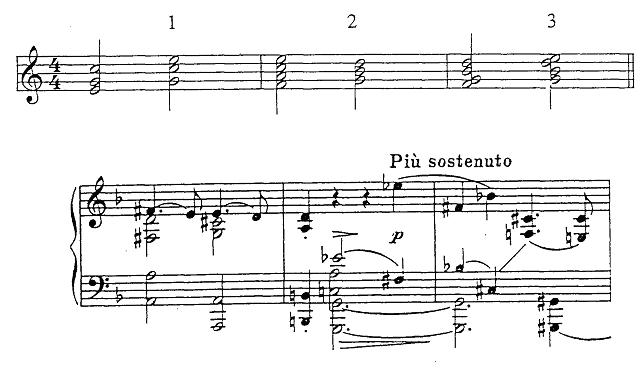
The chords made up by music figures which are lower than whole are joined through a single stem located on the part of the note that is less far away from the third line (Example 1). In case of equal distance, the reference stem is set towards below (Example 2). If the notes of a chord are much more distant, they are not written as aligned but from right to left with respect to the stem (Example 3). Examples:
Chords for guitar
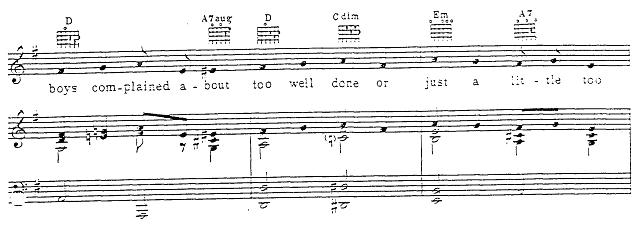
Symbols used in partitions to indicate the positions of chords for guitar through black dots set along the six horizontal lines.
Clef
The clef is a reference sign set at the beginning or within the music line with the aim of identifying a line with a given sound so to assign each note a right position in the whole pentagram. When the clef is inserted in the course of the music text it usually has reduced dimensions.
The Italian translation for clef is chiave and originates from the Latin clavis, whereas in English it is called clef, in Spanish clave and in German Schlüssel.
The modern notation uses three types of clefs: G-clef, F-clef and C-clef.

Clef framework
The set of alteration signs (sharps or flats) at the beginning of each music line, right after the clef, at the beginning of a text to define its basic tones or in its course to alter the text itself. Each sign is situated in the line corresponding to the note that, during the text, will be always intended as preceded by that alteration in whichever octave. Adopted in tonal music from the Seventeenth century, the clef framework is not used in atonal music (See Constant alterations).
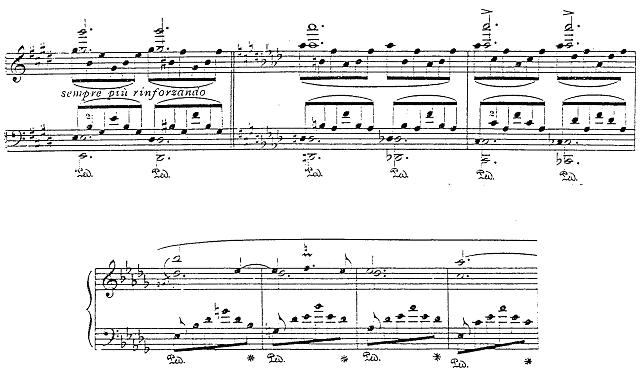
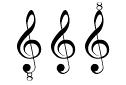
Clefs to translate an octave above or below
There exist some instances in which the notes read have to be translated an octave above or below. The indication for the translated reading is set above or below the clef with number eight. Here you find all the various instances:
G-clef with reading an octave below:

G-clef with reading an octave above:

F-clef with reading an octave below:

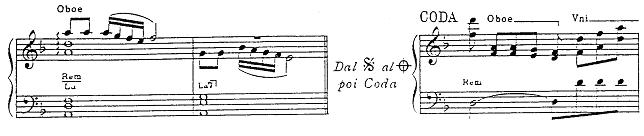
Coda
The word Coda set above the first bar of a music text fragment indicates that the fragment has to be executed as a final part.
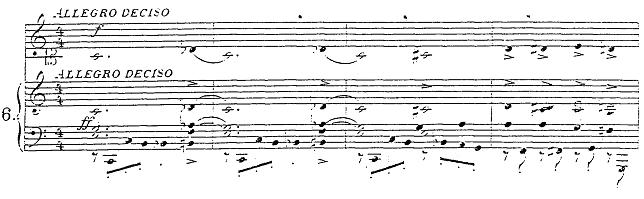
Comma or Breath

Its graphic sign is a comma that, set at the end of an inclusion or a sentence, allows for a short rest or breath. It is a characteristic sign of music for the bowings and voice. If the coronated dot is above the comma, the rest may be longer:

Composed Ornaments
Composed ornaments are made up by two or even three symbols on a single royal note. Here you are some examples:
Acciaccatura with arpeggio.
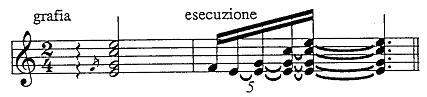
Appoggiatura with arpeggio.
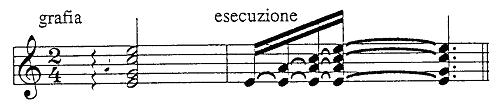
Acciaccatura with mordent.
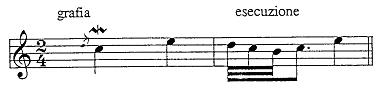
Appoggiatura with mordent.
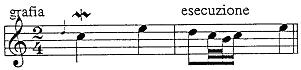
Beside to the examples considered, there exist rarely used composed ornaments which are made up by either appoggiatura, mordent and turn, or acciaccatura, mordent and turn.
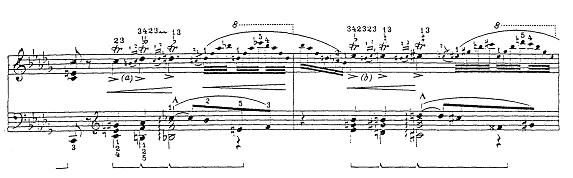
Constant alterations
Constant alterations are determined through tone (that is, not belonging to the scale) and are set at the beginning of the music line right after the clef and alter all the notes with the same name, from grave to high, the whole music text, unless you find another indication of a constant alteration.
In the following example you find two flats after the clef, the first one on the line belonging to the B and the second one in the position of the E, therefore all the Bs and the Es of the music text will be considered as flats.

The signs of constant alterations build the clef framework and are repeated at the beginning of each music line. To annul the effect of the constant alteration you use the natural which turns the altered note back to its natural state.
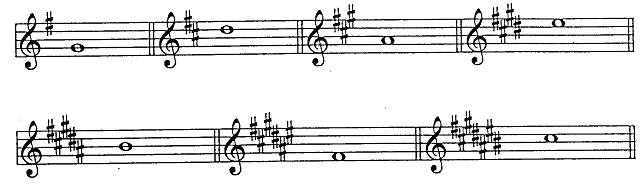
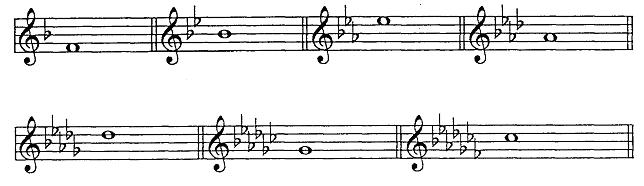
The maximum amount of constant alterations is seven and they follow in a progression of fifths, ascending from the first note F for sharps and descending from the note B for flats.
Constant alterations with sharps:
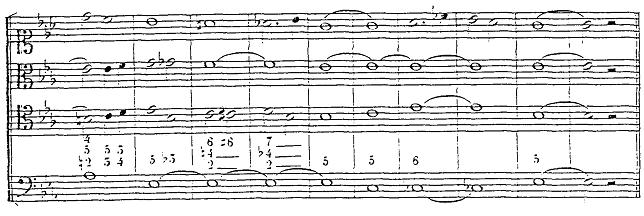
Constant alterations with flats:
Coronated dot

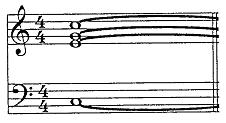
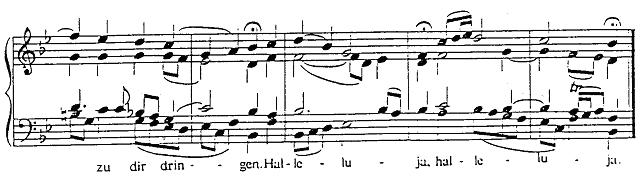
It is a symbol set above the note enabling the player to prolong the value of the note as he likes. It is used in particular expressive moments and often at the end of a music text:

To prolong the sound for an undefined time there is another rarely used symbol:
D
Da Capo

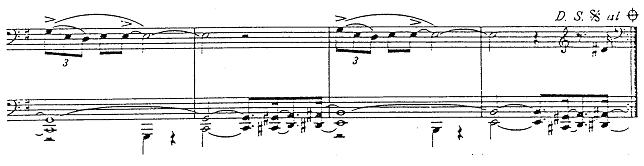
Conventional sign expressed through the symbol: which enables the repetition of another music text from its very beginning or from the point found. The repetition is often limited as far as another point found through the word End, coinciding with the final part of the text itself (See Abbreviation signs).
Detachment dot
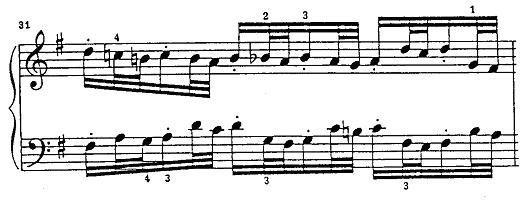
Sign set on a note showing that this one has to be executed as detached, that is, broken in its duration value and separated with a short caesura of its following note (See Staccato).
Double bar
It consists of a double bar dash and will indicate where a part of the music text ends up. It is even used before changes in tempo, tone and clef (See Example 1). When the second dash of the double bar is larger, it indicates either the end of a music text or the introduction of a refrain (See Example 2).
Ex. 1

Ex. 2


Double dot
(See Value dot)
Double flat
Music accidental that alters a written note of two descending semitones when set afore the former. This sign is not set in clef framework (See Alterations).
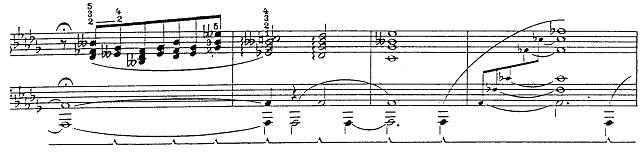
Double natural

Music accidental that annuls the effect of a previous double flat or double sharp when set afore a written note. This sign is not set in clef framework (See Alterations).
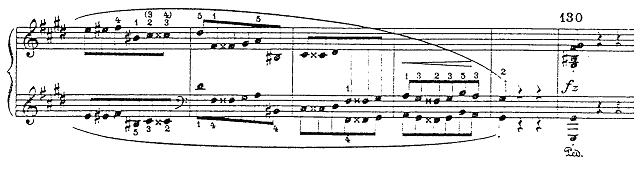
Double sharp

Music accidental that alters a written note of two ascending semitones when set afore itself. This sign is not set in clef framework (See Alterations).
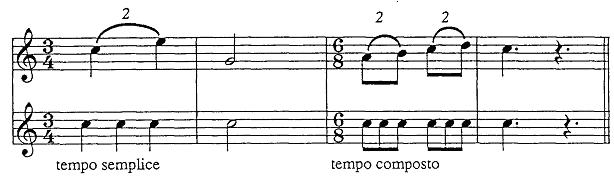
Duplet
Irregular turn characteristic of ternary measurements and composed tempos. It is irregular on default since stems from a turn of three notes:
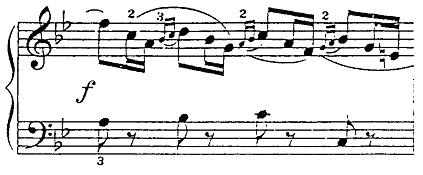
E
Eight note

Name of both a note figure note and a rest figure. It indicates the relative value of a duration corresponding to 1/8 of the whole (See Music figures).
Empty
Adjective bearing the meaning of rest in the bowings with a neck. In the strings equipped with neck it refers to the chord you let vibrate in its whole length without applying any finger on the keyboard (See Empty chord).
Empty string
When, in the strings, the string is made vibrate in its whole length. It is indicated with a small circle above the note:

Expression
Expression signs are symbols that indicate the player the intensity (or the volume) the sounds of a music text should be reproduced.
These signs are:
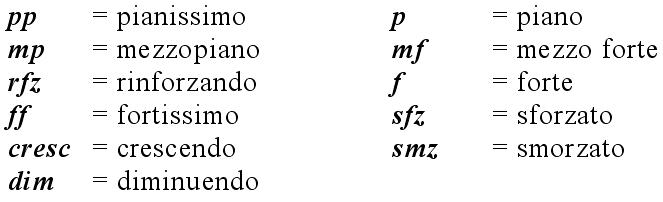
The gradual passage from piano to forte is indicated with the word crescendo and, vice versa, diminuendo (abbreviated: cresc. and dim.) or using forks:

The swift passage from forte to piano is indicated through the abbreviation  , the inverted passage through
  .
.
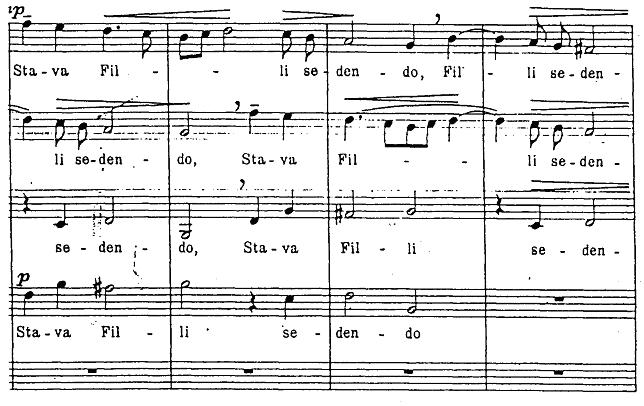
Expression Signs
Accent, Portamento tie or expression tie or sound tie, Sentence tie, Sub-ties, Staccato, Staccatissimo, Mezzo staccato, Leaned (or brought) sounds (appoggiatura), Mezzo appoggiato, Comma or Breath
F
F-clef or bass clef or baritone clef
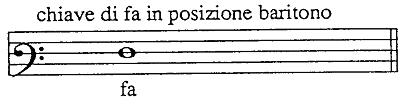
Its form stems from the letter "F"; which, in the ancient alphabetical notation system, indicated the note F. It can be inserted into either the third or the fourth line. When situated on the third line it is called baritone clef. Its position is clearly defined by two dots above and below the third line.
Example:
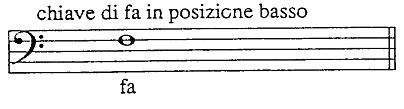
When situated on the fourth line it is called bass clef. Its position is clearly defined by two dots above and below the fourth line.
Example:
The corresponding F sound for both clefs is the one for the third octave of the piano, also called F2.
The F-clef is adopted by all the instruments with a grave extension (violoncello, bassoon, contra-bassoon, bass trombone, bass horns, etc.) as well as keyboard instruments, such as piano, clavichord, etc., which make use of the triple pentagram system.
The F-clef is also used for vocal music for texts for Baritone and Bass voices.
Fermata

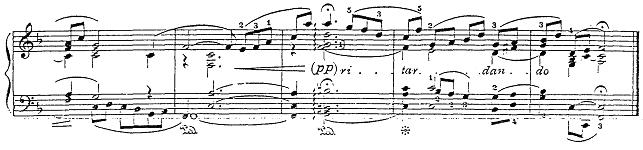
Graphic sign that, if set either over a note or a rest, prolongs its duration for an undefined spell of time.
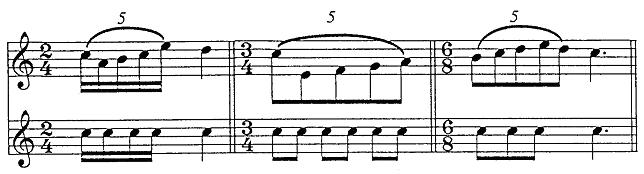
Five-line stanza
It belongs to irregular turns. It derives on excess from a group of four in simple tempos; in composed tempos and ternary measures it derives on default from a group of six or on default from one of three. Rarely does one find a five-line stanza corresponding to a group of eight in simple tempos.
Flag
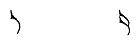
Curved sign belonging to the music figures worth equal or lower than an eighth note.

Flat

Music accidental that alters of a descending semitone the note before which it is set. This sign is also set into the clef framework showing the constant alteration of one or more notes within a whole music text (See Alterations).
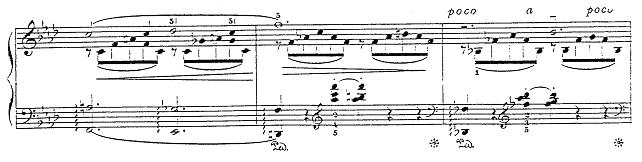
Forks

(See Dynamic).
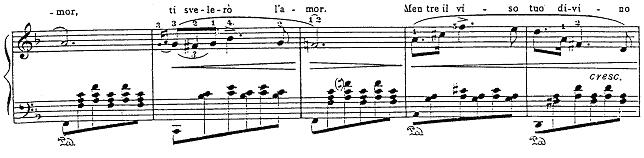
Fraction
Sign of rhythmic indication that is set at the beginning or within a music text (See Measure).
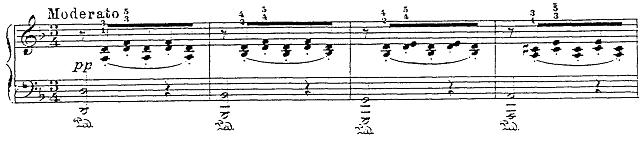
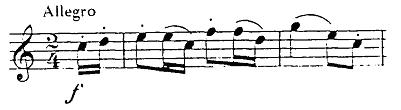
G
G-clef, treble-clef or chant clef
Its form stems from the letter "G" which, in the ancient alphabetical notation system, indicated the note G.
It is exclusively located on the second line (you always start by counting the lowest line) since the initial point is situated on the second line, as you can see from the example. The corresponding sound G is equal to a fourth piano octave also called central octave G or G3.
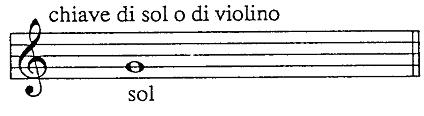
The G-clef is adopted by all the instruments with a high extension (violin, and hence the name flute, piccolo, clarinet, oboe, trumpet, mandolin, guitar, etc.) as well as keyboard instruments, such as piano, clavichord, etc., which make use of the double pentagram system or the organ making use of the triple pentagram system. The G-clef is also used for vocal music for texts for voices of soprano, mezzo soprano, contralto and tenor by lowering sounds of an octave (See tremble-clef or C-clef or tenorized G-clef).
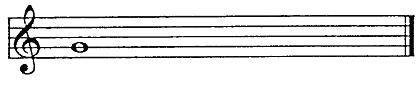
Here you find examples of a line with a simple pentagram:
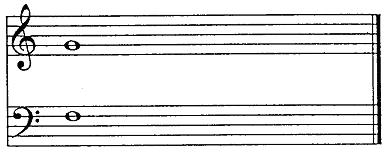
Double pentagram:
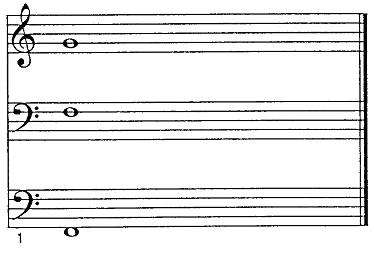
And triple pentagram:
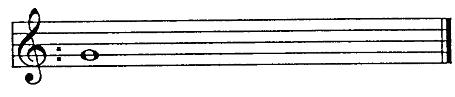
Some ancient writings for precisely indicating the clef position used to adopt the addition of two small dots above and below the second line. This occurred since, throughout the Seventeenth century, the tremble-clef could be situated on the third and especially on the first line (French tremble-clef) too.
Here is an instance of a tremble-clef with the indications of the two small dots:
Glissando
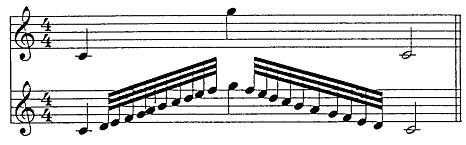
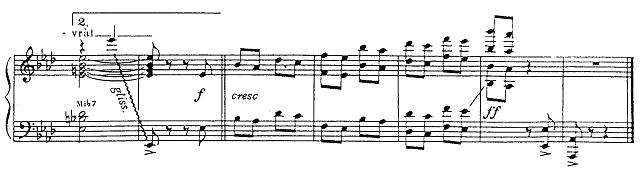
Glissando consists in swiftly moving throughout a scale. With some fixed pitch instruments, such as the fiddle, glissando is obtained by positioning one's finger along the chord towards the bridge (or vice versa). In so doing, all the increasing (or decreasing) frequencies to the high are reproduced. In fixed chord instruments, such as the piano, glissando is obtained by creeping one's fingers along the keyboard.
In coulisse instruments, such ad the bassoon, glissando is obtained by either extending or shortening the air column contained along the instrument tube. Graphic examples with glissando:
Grace notes
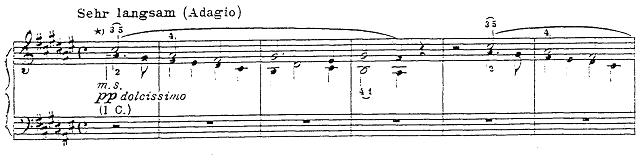
Grace notes are grapfically smaller notes located between two real notes. They have a virtuous character and a general quick execution but follow no strict rhytmic subdivision. Grace notes, if at the end of a music text, are said cadenzas:

H
Half note
Name of both a note figure and a rest figure. It indicates a relative value corresponding to 1/2 of the whole (See Music figures).

Head
 Full part of the note figure.

I
Interval
The term interval refers to the distance between two sounds. Width can be expressed in a number of ways. For instance, we can say that between the notes C – E there is: a one-tone interval; a major second interval; a relationship which equals 9/8.
Irregular turns
Irregular turns are rhythmic groups exceeding or defaulting with respect to the groups belonging to the same species and can be recognized thanks to the number and a line (or tie) which are positioned above. Example:
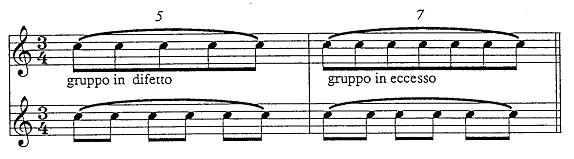
Irregular turns can contain rests, value dots and decompose rhythmically. Duinas and quatrains are regular in simple tempos and irregular in composed tempos, whereas three and six notes are regular in composed tempos and irregular in simple tempos. All other turns are irregular in both instances.
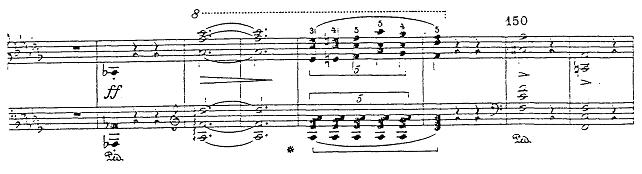
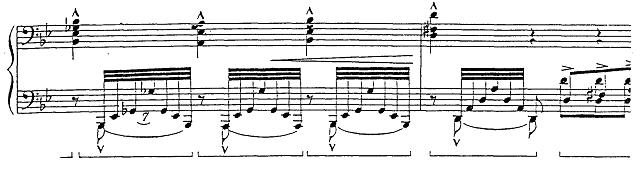
Irregular turns with mixed formations
Irregular turns can contain some irregular formations within themselves:

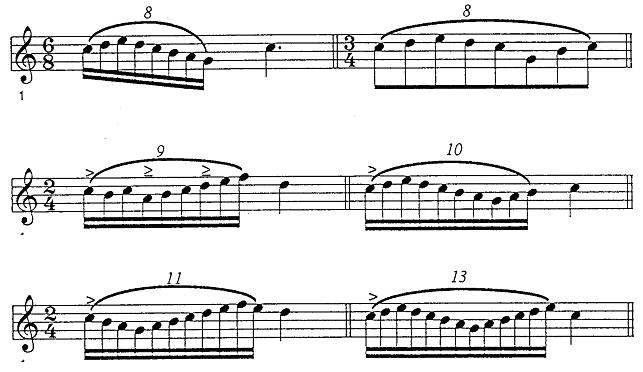
Irregular turns with over seven notes
We are showing some examples of irregular turns made up by seven, eighth (in composed tempos or ternary measurements), nine, ten, eleven and thirteen notes. Obviously, the present list might carry on but music practice rarely makes use of irregular turns with over thirteen notes.
L
Leaned sounds
Their graphic sound is a short line above the notes and indicates a slight accenting with a short breath among the notes themselves:
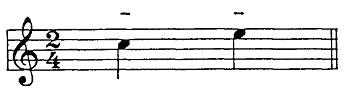
If the sound needs to turn out as more remarkable there exist following symbols:
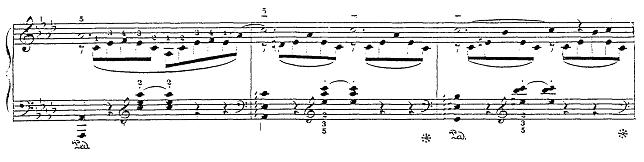
Marked Very marked
(See Marked sounds).
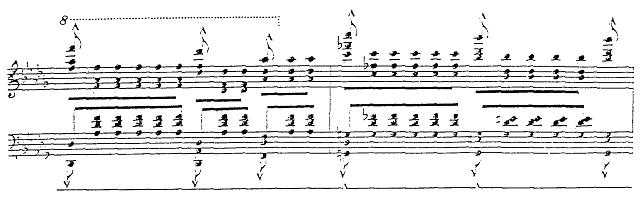
Ledger line
Upper or lower part of the head of a note figure. It comprises the additional cuts needed to turn make the extra-height of the notes written out of the line into average.
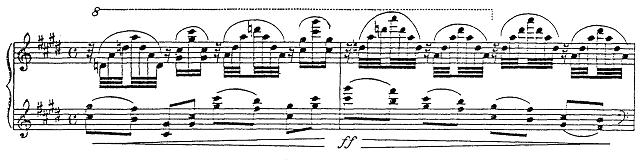
M
Marked
Metronome

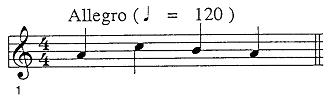
To indicate more precisely how quick a composition is executed, the metronome ticks impulses with regular temporal intervals. The first composer who used it was Beethoven. The indications of the bars of the metronome only refer to the unit of time (1). Example:
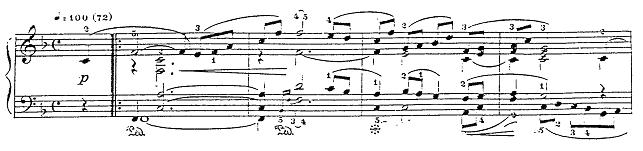
Mezzo appoggiato
It is indicated by the symbol of sounds leaned on detached notes and involves a shorter execution than appoggiato.

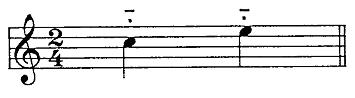
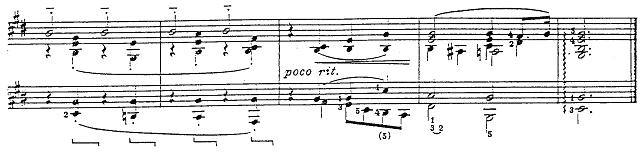
Mezzo staccato
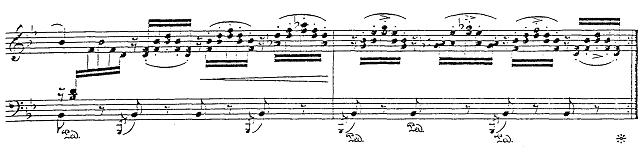
It is graphically represented with a tie above the detached notes; it indicates that sounds have to be slightly separated among one another. For the former ones it consists in executing a series of detached notes to be executed in a single bowing, whereas for the latter ones it indicates a quick execution of detached notes, often in a high register:


Modes
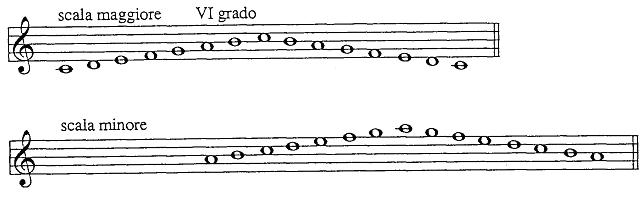
According to the order by which we "get on" diatonic scales, we can determine the mode. In our system we have two modes: major and minor.
Thus, we can point that the step from which the scale begins determines its name (C, D, E sharp, B, etc); this order determines the mode (major or minor).
The first note of the scale is called First degree, the second one Second degree, the third one Third degree, etc.
Mordent
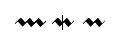
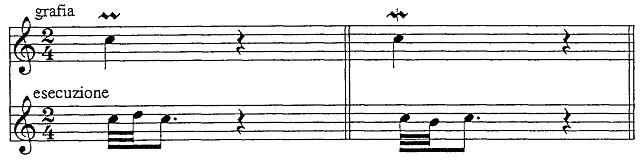
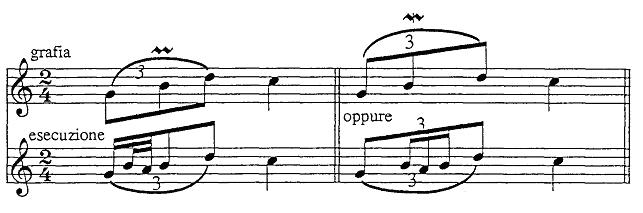
The mordent is made up by the swift alternation of three notes: royal, upper (or lower) auxiliary and royal. Its graphic sign is set above the note and can be of two types:
Upper mordent  , lower mordent
The mordent subtracts some value to the note it is set on and the accent falls onto the first of the three notes.
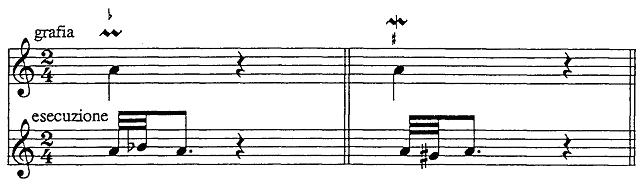
If the auxiliary note must be altered, the alteration is set above (or below) the ornament.
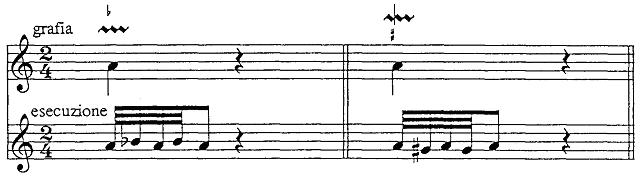
The mordent can be even double, that is, composed of five sounds.
Example:
Examples of mordent on short-value notes:
Music Figures
The indication of the duration of sounds and silences is represented graphically through a series of symbols termed music figures. Obviously, even for sound durations it is necessary to have a unit of measurement, such as there exist some for space (meter), weight (gram), etc. This unit of measurements is called whole. However, it has no absolute value but depends on the indications that you can find at the beginning of the music text (e.g., Allegro, Adagio, etc.).
Each music figure corresponds a rest (time of silence) of an equal temporal value.
In the following table you find a list of music figures with their relative rests and indications of values.
| NAME | FIGURE | REST | VALUE |
|---|---|---|---|
| Breve |  |
 |
2 Two wholes |
| Whole |  |
1 A whole | |
| Half note |  |
1/2 A half | |
| Quarter note |  |
 |
1/4 A fourth |
| Eight note |  |
 |
1/8 An eighth |
| Sixteenth note |  |
 |
1/16 A sixteenth |
| Thirty-second note |  |
1/32 A thirty-second | |
| Sixty-fourth note |  |
1/64 A sixty-fourth | |
| Hundred twenty-eight note |  |
1/128 A hundred-and-twenty-eighth |
The whole is commonly indicated with the indication 4/4. Accordingly, the breve with 8/4 and the minimal with 2/4.
The rest of one eighth can be confused with the one of one fourth present in some ancient editions.
There exist some graphic signs allowing to augment the duration of music figures. They are: - tie - dot - coronated dot
N
Natural

Alteration sign preceding a note in order to annul the effect of either a previous alteration or the clef framework (See Alterations).
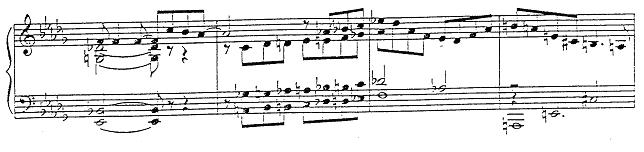
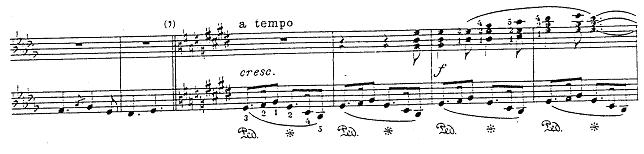
Numbers to indicate measure
O
Octave above and octave below

The notes can be even written out of the pentagram but in this case they have to be accompanied by additional cuts as signs indicating imaginary lines. In some instances, in order not to make the reading too difficult because of the too many cuts, we use the indication accompanied by a horizontal line of "octave above" or "octave below".
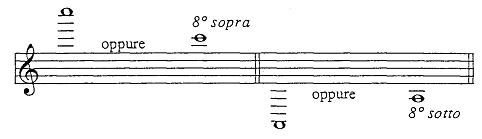
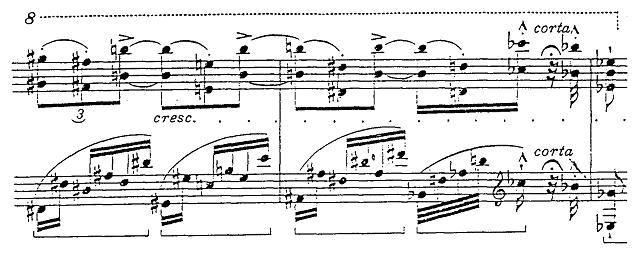
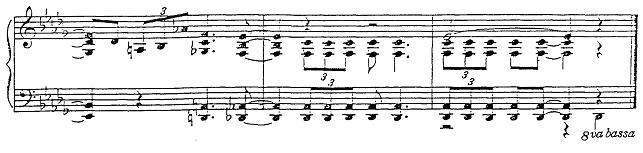
One chord
Indication set in piano partitions to indicate the moment when to push the pedal piano. To retrieve the pedal you find the indication "three chords".
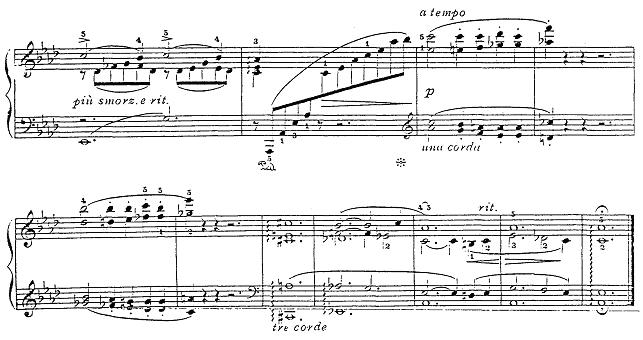
One hundred twenty-eight
Music figure whose value corresponds to 1/128 of the whole.
Ornament
Sound, group of sounds, or particular sound effect that are inserted into the picture of a melody line with an expressive or ornamental aim. Main ornaments are: acciaccatura, appoggiatura, arpeggio, trill, mordent, turn. (See)
P
Pentagram

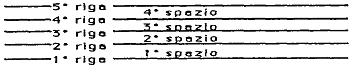
The notes of the scale are represented with circular symbols set on the pentagram. It is a set of five horizontal lines and four interline spaces.
Notes and rests are written both on the lines and among the spaces.
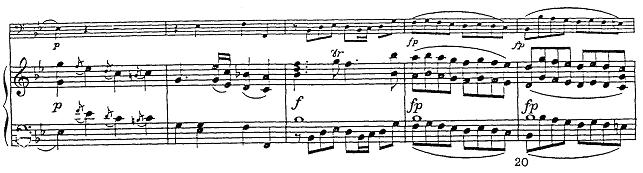
In a music text the dimensions of the pentagram can be quite varying. By measuring the distance existing between the extreme lines of a pentagram (between the first and the fifth line) we have found some measures ranging 0.50 cm to 0.75 cm and rarely measures over 0.85 cm (music for children).
Different measures can be even present in the same page.
The above-reported example shows a partition for piano and flute. The part for piano is marked with a double pentagram with a larger thickness than the flute. This because the pianist usually uses the upper part as a melody trace.
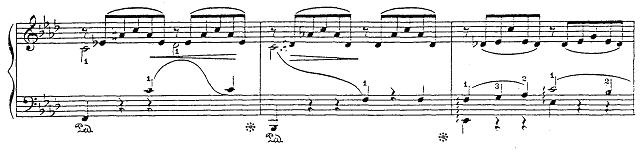
Portamento slur
It consists of a bowing line located above or below two notes with a different height enabling the sounds to be executed without perceiving any interruption between a sound an another one. Examples of portamento slurs:

Precautory alterations
Precautory alterations are not necessary though used to remind the original pitch of a note if this has been altered in the previous measure. They are often set between two brackets:

Printing style and notation norms
Here is a list of the main notation norms:
The chord of music figures is always set at the right of their leg. Music figures worth below than the whole and positioned below the third line have their stem towards up whereas those above the third line have their stem towards down, and those on the third line have no obligation at all but follow the route undertaken by their close-by notes. When several notes are linked by a single tract, the stem direction is established by observing the farthest note from the third line. Examples:

Joining tracts unify music figures so to make movements and subdivisions more understandable:
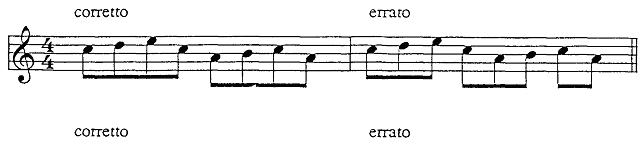

When possible, even rests have to be indicated so to ease to catch up their rhythm:


In some instances, we suggest using a tie in the place of the dot:

The joining tract between two or more notes in succession is not used when there is a text except in the cases in which the same vowel has the tone of more notes, such as in vocalizations (1).

Q
Quarter note

Name of both a note figure and a rest figure. It is a relative value corresponding to 1/4 of the whole. (See Music figures).
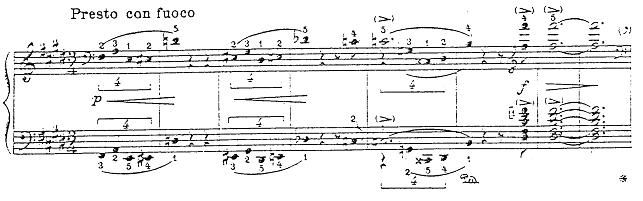
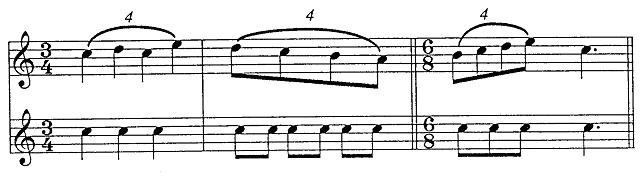
Quatrain
It belongs to irregular turns. It derives either on excess from a group of three notes or on default from a group of six notes:
R
Rest
(See Music figures).
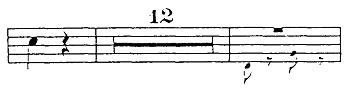
Moment of silence in music. It can have a determined or an undetermined duration (corona). When a whole rest appears as the only sign in a bar of any value it means it is empty, that is, there is a rest as long as the duration of the whole measure.
A series of empty bars is generally abbreviated into a single one, indicated with a long tract with above the number corresponding to the number of bars themselves in bold. As for notes, the dot (value dot), when situated on the right of the rest sign, improves the value of the latter of its half. An undetermined rest is indicated with the sign of the corona … above or below any sign of determined rest and its duration is left free to his player, anyway keeping a relationship with the proper value of the rest sign.
S
Scale
The term scale indicates a series of sounds ordered in an ascending or descending direction, starting from any note until it reaches its related octave.
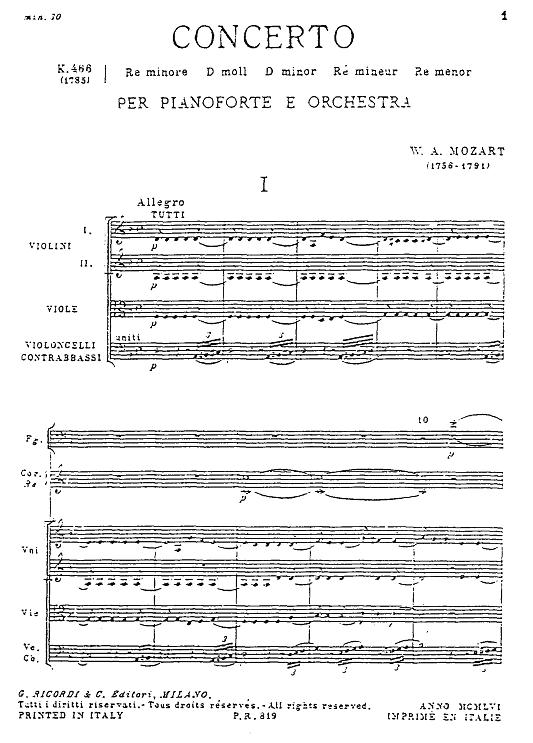
Score
Graphic representation of a music text for more parts or instruments. The score is made up by various music lines set over one another.
Semibisquaver
Name of both a note figure and a rest figure. It indicates a relative value worth corresponding to 1/64 of the whole.
(See Music figures).
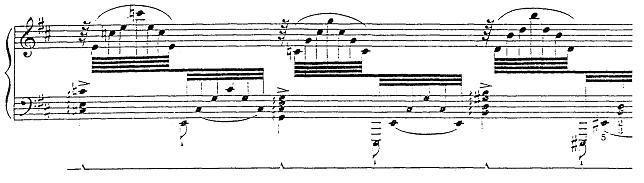
Semiquaver

Name of both a note figure and a rest figure. It indicates a relative value corresponding to 1/16 of the whole.
(See Music figures).
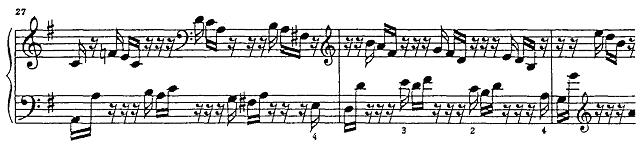
Sestina
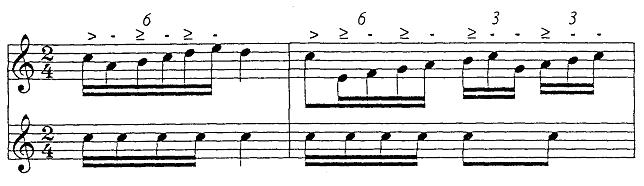
An irregular turn deriving on excess from a group of four and rarely from one of eight. In the modern notation it can be written both by joining with a G the group of notes and marking it with the number 6 and graphically highlighting its internal subdivision into three sub-groups of two notes, according to the accenting desired.
Here are some examples:
Settimina
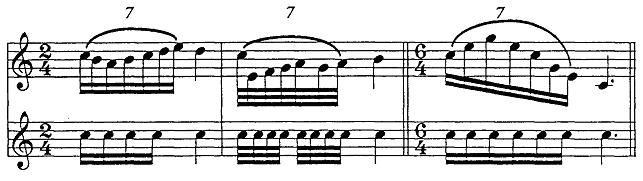
It belongs to irregular turns and derives on default from a group of eight notes:
Sharp

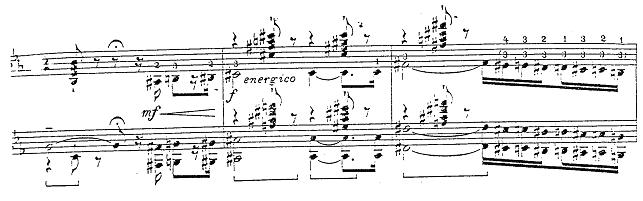
Music accidental which alters the written note of an ascending semitone when situated afore the latter. The sign is also situated in clef framework where it indicates the constant alteration of one or more notes in the course of a whole music text (See Alterations).

Slur
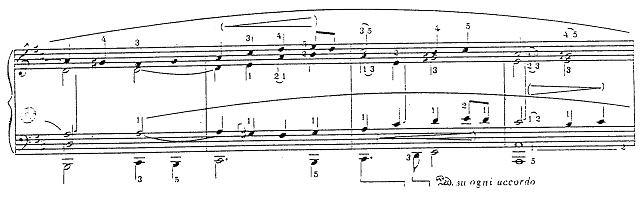
It is distinguished from the tie since it joins more than two notes. If very large, the slur often indicates no technical execution way but rather a finished melody line to be highlighted in the most suitable manner and in this case it is possible to find some notes joined by ties within itself (See Sub-ties). Example of slurs:

Staccatissimo
The most outstanding effect of staccato since the note will be executed as more marked and with a shorter value; its symbol is an apex on the note:

Staccato
Vocal or instrumental execution mode in which short sounds are separated from one another by a short caesura. It is opposed to the legato and is graphically indicated with either dots or small wedges on the notes.

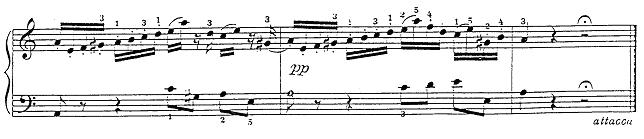
Steam
Vertical segment making up the music figure symbol. Its other elements are: head, neck (or throat), tailpiece, or comma, and travature.
String / Slash
Sub-slur
They are slurs (also called expression links) which are found under a sentence tie to better indicate melodic inclusions. As far as music with the bowings is concerned, sub-ties can indicate a turn to be executed with a single bowing:

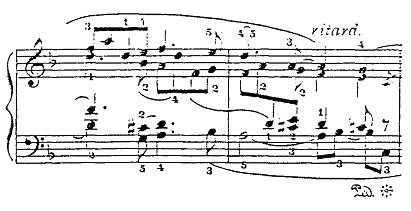
Supporting pedal

Graphic sign that shows the pianist the moments in which this pedal has to be used or not.
It is made up by two graphic signs:
The supporting pedal can be even indicated with a horizontal line that is broken in the points where lifting the pedal is needed.
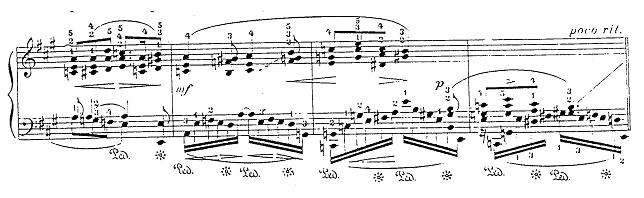
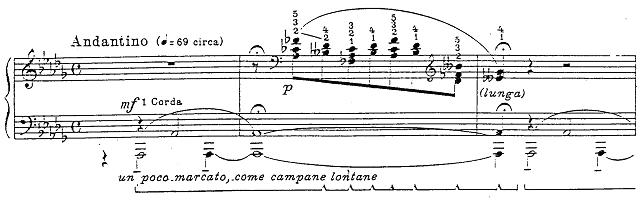
System
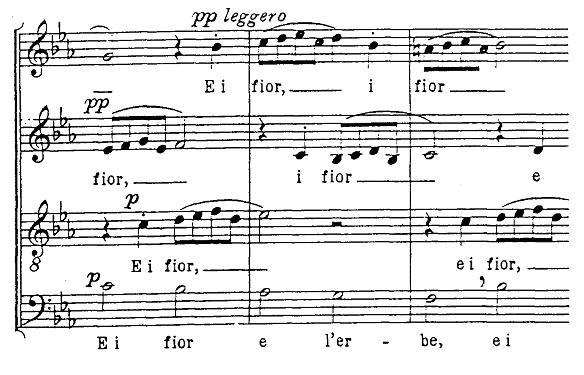
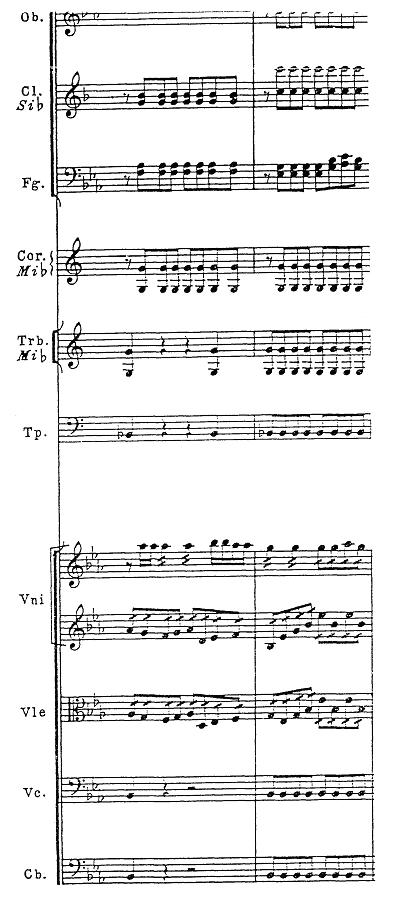
Set of pentagrams over one another to be read at the same time and comprising parts to be executed simultaneously by more players (e.g., in music for piano and organ, in partitions for chant and piano, in scores). Graphically, the system is marked with a vertical sign at the left of pentagrams. Should you want to highlight groups of instruments belonging to the same family or voices, then you set a more marked segment at the left of the system tract. The system can be simple, double or triple.
T
Tempo
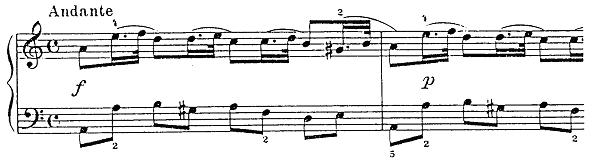
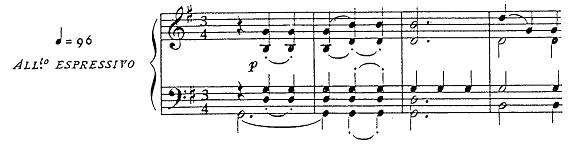
Numerical indication generally set at the beginning of a music text, after the clef and after the clef framework which indicates the duration of the following bars. The indication of the tempo can be varying during the music text as well (See Measure).
Temporary alterations
Temporary alterations are set in turn, where they are held for necessary, along the music text and their effect lasts for all of the following notes, in the same position, which can be present in the bar.
To turn a previously altered note in the bar into natural, you set the symbol of natural afore the target note. This symbol annuls double alterations (double sharp and double flat) too, but for a major clearness you usually make use of the double natural as well.
Graphically, both symbols appear as follows:
natural
double natural
Examples of temporary alterations:
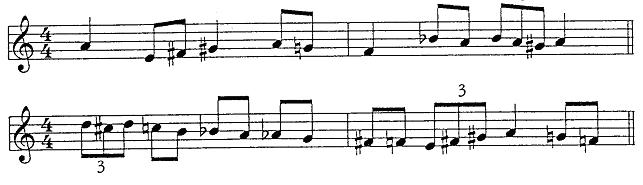
Examples of double alterations:

When you wish to annul the effect of a single alteration in a doubly altered sound you use to add a natural too:

In case the temporary alteration is set afore a note joined with a value tie to another note set in the following bar, the value of the alteration lasts only for the value of both tied notes.

When the two notes from the previous example are joined trough a portamento tie, the second tie sound must owe the symbol of natural:

When the value tie is between two altered notes in two different bars, of which the first one is at the end of the line, it is necessary that even the second note has the symbol of alteration:
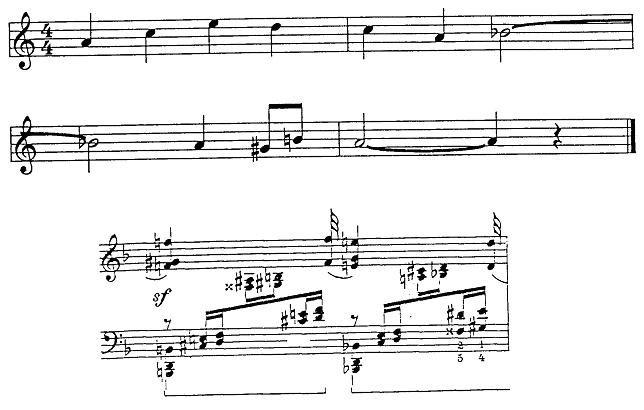
Tenor clef

C-clef situated on the fourth line of the pentagram if you start counting from below.
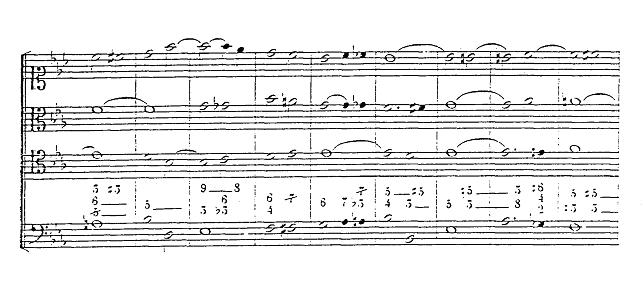
Tenorized G-clef or Violin Tenor
It is used to read texts in the tenor's extension with the most commonplace tremble-clef. Sounds correspond to a graver octave than marked sounds.
Here is an example of G2:
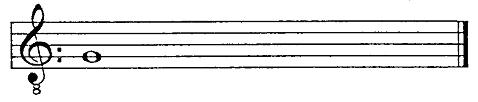
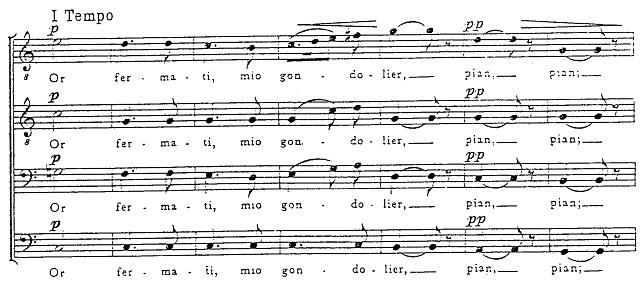
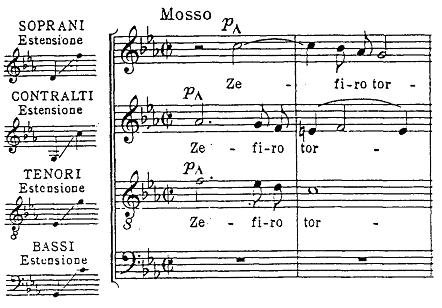
Texture
Field of sounds, from grave to high, that either a voice or an instrument are able to sing or to play.
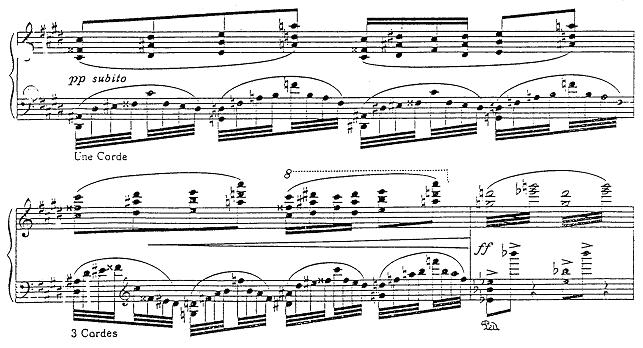
Three chords
The term "three chords" is set in piano partitions to lift the pedal piano that had been pushed after the indication of one chord.
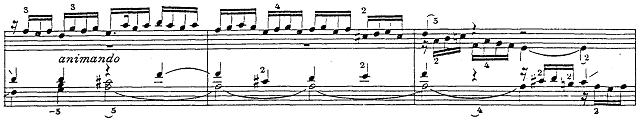
Tie
It is graphically represented by a curved line above or below two notes of the same height. Its result consists of the sum of the two music figures which produce a single sound. Two sounds with a different name can be joined but they need to correspond to the same height (i.e., the same instrument key).

Time signature
Time signature is set at the beginning of the music text and at the point in which you want to modify the rhythmic track of the music text. As well as the fraction, if you want to indicate the measure you can normally use following symbols:
4/4 or 
2/2 or 
Tremolo

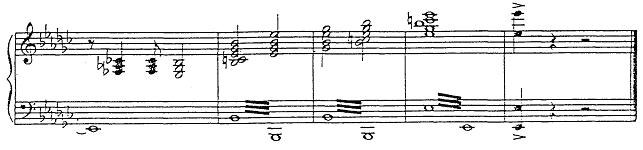
Vocal or instrumental effect obtained through quickly repeating one or more sounds (See Signs of abbreviation).
Trill
The trill consists of a quite rapid succession of the royal note and its upper auxiliary. The trill generally begins and ends with the royal note. Its duration equals the value of the note it is set on. Its graphic symbol is made up by the consonants "tr" along with a wavy line (1).
Direct trill:
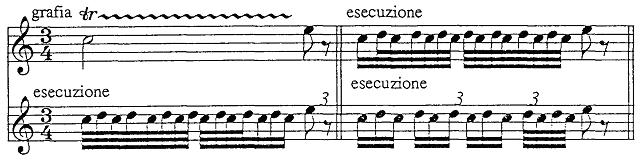
Inverted trill:
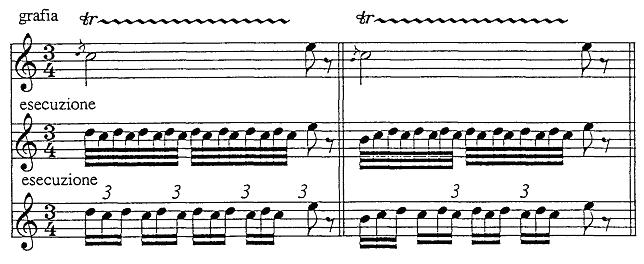
There exists a further symbol, though not used any longer, to indicate the direct trill, the inverted trill, the trill with the beginning on the lower auxiliary note, and the inverted (upper or lower) trill with closing:

The trill can have a preparation:
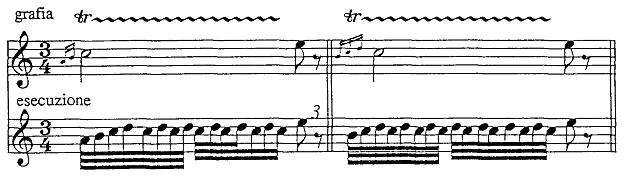
And a closing:
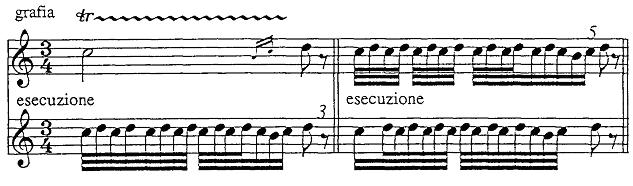
Or a preparation as well as a closing (the symbol of the alteration refers to the auxiliary note of the trill):

The trill can even be double or on a chord:

The trill can occur with following exceptions:
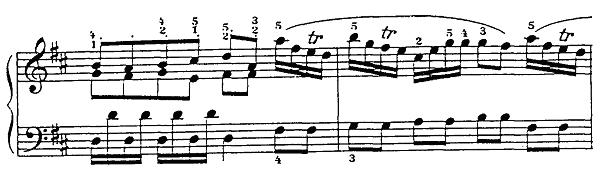
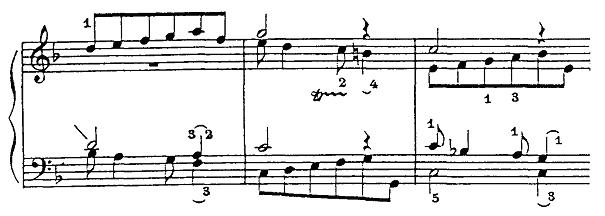
When the royal note of the trill is preceded by a note with the same height as itself, the trill starts with the upper auxiliary. Equally, if the note following the trill is identical to the royal note, the trill ends with the auxiliary note. When it is at the end of a period, we suggest executing the trill with closing even if the latter is not indicated.
Triple dot
(See Value dot).
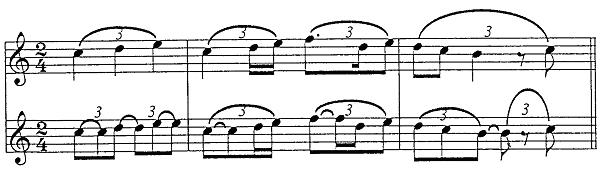
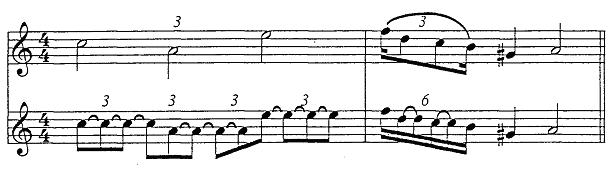
Triplet
It is a characteristic group of simple tempos. It is usually on excess as derives from a group of two notes though can even be indicated on default as arising from a group of four.
Here you have some examples of triplets:
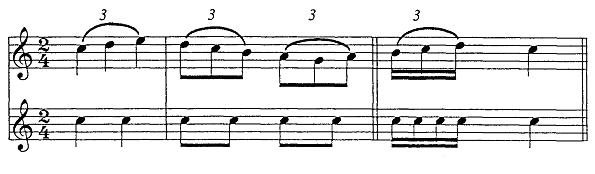
In some instances the triplet can be decomposed as follows:
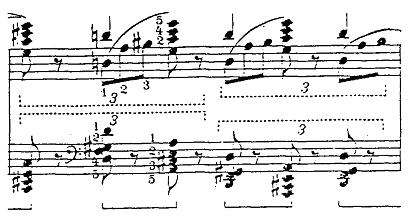
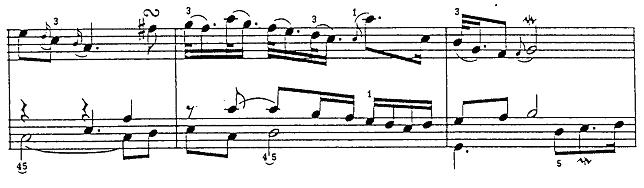
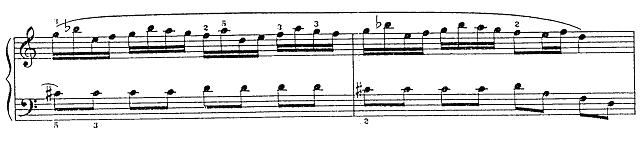
Turn

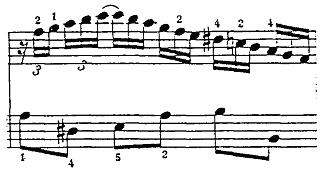
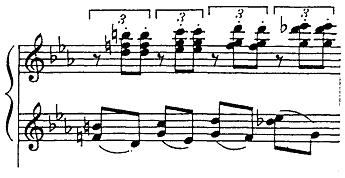
The turn is made up by the figuration of five notes which include, as well as the note the ornament is situated on, the note with the upper joined grade and the lower grade note than the note itself. Its execution is brilliant and usually instrumental.
The turn is symbolized through an "S" which is rounded by ninety degrees and indicates, according to its position, the melody route of the notes which comprise the ornament.
Example of a direct turn and of a upside-down turn:
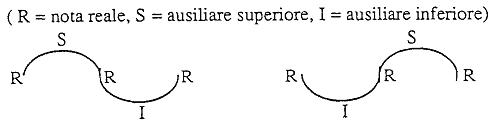
If the auxiliary notes in the turn are altered, the alteration sign is located above or below the ornament in order to indicate the upper or lower note, respectively:
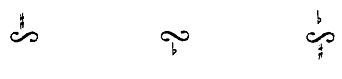
The turn has two execution ways that depend on the position of the sign:
If the sign is above the note, the turn is executed on the bit and the first note receives the strong accent.
Example of direct turn:

Example of upside-down turn (1)

If the symbol is situated between two notes, the ornament is executed on the weak part of the tempo.
Example of direct turn:

The upside-down turn can be even indicated with the symbol:

Example of upside-down turn:

Turn on a chord:
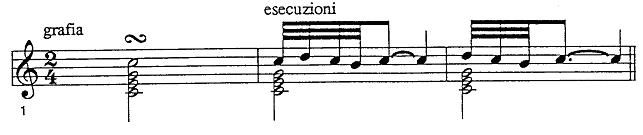
On a dotted note:


U
Unit
(See Whole note)
V
Value dot
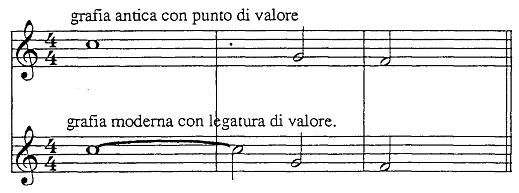
It is a graphic sign set on the right of the figure and augments the note value of a half of the note itself. You can set more than one dot after the figure. In this case, the second dot is worth a half of the first one and the third dot is worth a half of the second one:
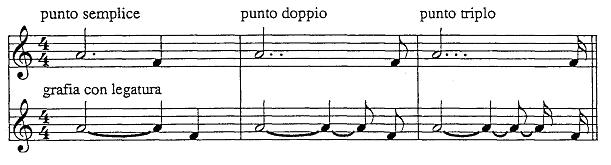
The dot can be even situated beyond the bar; in this case the value of the dotted bar is prolonged in the following bar: